After a very lazy week in Mauritius, it was time to make our way to Cape Town for the start of our organized safari. In Cape Town, we went to Robben Island, where Nelson Mandela was imprisoned during the apartheid years. It was quite a sad experience listening to the guide, who was imprisoned there himself, tell the atrocities that occurred there not so long ago. Adding to the apartheid excursions was the township tour. It was quite humbling to go through these neighborhoods, most of which wouldn’t even be adequate for farm animals in the US. In a “hostel”, which consisted of four small bedrooms, one bathroom and a kitchen, there could be up to 12 families living there. Those at least were made of stone, while some others who didn’t like the cramped living quarters made their own hut of a mixture of scrap metal, wood, and cardboard with dirt floors. It was a weird experience wandering around the area that is very much lived in, with all the little kids so starved for attention that they clung to you. Other than the still obvious effects of apartheid, the city is quite nice- a beautiful maritime landscape topped off by Table Mountain.
Namibia
It was time for our organized tour with Acacia to begin. The first real stop was at the Fish River Canyon which is the second largest canyon in the world behind the Grand Canyon. It was a big hole in the ground, similar to the Arizona version, but significantly smaller (160km vs. 446km long, 27km vs. 29km wide, and 550m vs. 1.6km deep), and with less majestic colors (in my humble American opinion).
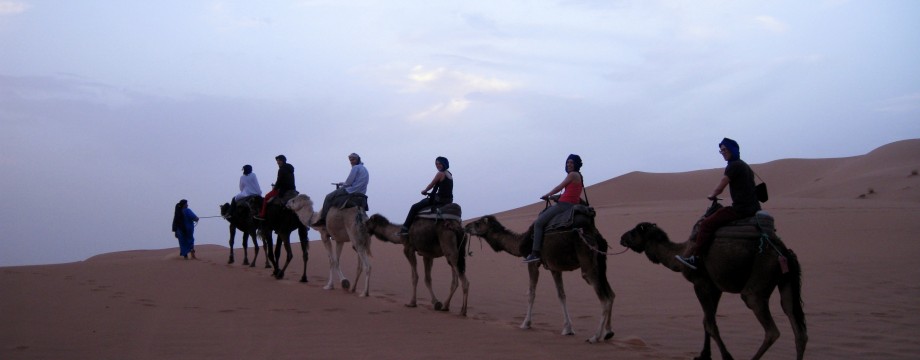
Namib-Naukluft Park, the red sand dunes of Namibia, was awe-inspiring. We climbed Dune 45 at sunrise, which overlooked all the iron-rich dunes in the area. Absolutely amazing scenery.
Swakopmund is a very German town that Brad and Angelina made famous. It is known as the extreme sports capital of Africa. We went sandboarding, which is like snowboarding but on sand, which hurts much less falling than on snow and ice. We also rode down the dune on a piece of polished wood on our stomachs, much like sledding. I somehow managed to get the least air resistance of anyone doing it that day and had the fastest clocked speed at 75km per hour sliding down the dune, before crashing headfirst into a sandbank (I am still finding sand everywhere). We also went quad biking around the dunes, which allows much faster speeds than typical 4×4, it was ok, but nothing too spectacular except the views of the water.
We made a brief stop at Cape Cross to see the quarter of a million seals residing in area. They managed to create one of the foulest smells I have ever witnessed. Despite the stench, it was a sight to see with so many seals either laying on the rocks or swimming in the Atlantic Ocean.
Etosha National Park had a lot less density of animals than Kruger, so it was kind of a disappointment in that respect. They did however have a watering hole at the campsite that was light with floodlights all night which allowed good viewing of rhinos coming to drink past dusk. The coolest part was how close the animals came to the viewing stands though. In the middle of the night I was woken by very loud lions roaring at the watering hole. I of course jumped out of bed in time to see them wandering/laying around. I was hoping they were going to be hunting the zebra also at the watering hole, but they weren’t hungry I guess and just kept to themselves.
Vacation from Vacation
Mauritius is a fair sized island in the Indian Ocean that is east and a couple clicks north of Madagascar. Where the official language is English, yet everyone speaks French and hardly anyone speaks English. Formerly part of the British Commonwealth, there doesn’t seem to be a lick of British culture left on the island save for some traffic circles, which by the way have traffic cops on the country’s only major highway. Traffic circles apparently don’t work when you never have a break in traffic from one direction for an extended period of time. According to our airport transfer driver, 10% of the Mauritius population commutes to the capital city of Port Louis on this major highway. So basically, the highway is gridlock going south anytime after 12PM. We stayed on the northern part of the island in the touristy area of Grand Bay. Mauritius is like Hawaii divided by 100. The major resorts are 2 or 3 stories, and there are only 5 of them in a row in the area we were. There was one super market, a casino the size of a Rite Aid (that came equipped with dodge ‘em cars and bumper boats for the kids to play on, when combined was larger than the gaming room floor), a ton of restaurants and shops that sold Hollister paraphernalia at 5 times US prices.
We stayed at a budget bungalow complex on the main road for a modest 25 Euro per night fee. The airport transfer was more expensive. The lovely lady who greeted us and showed us to the room went through the normal spiel and finally got to the “surrounding area” part of the routine. All she said was, “the beach is that way, and the supermarket is the other way.” Compared with everywhere else we’ve been, this was a delight. It was nice not having to get a map and find directions everywhere we need to go. Instead, we walk out of the hotel, turn left for 50 meters, and voila, we’re at the supermarket/casino/dodge ‘em cars. The super market was not unlike any other. Except that the most popular item had to be the 400 gram, 11 Rupee freshly baked French bread (that’s just shy of a pound and less than 50 US cents and 4 adjectives). We would see people carrying backpacks of the French bread rolls out of the store. We purchased one daily.
Our days were mostly lazy. Explore a little the first few days, walk to the resorts and utilize their beaches and read or swim, hang out at the supermarket. We wanted to try out our newly earned SCUBA licenses in Mauritius, but we succumbed to our frugality. Anyway, we were bummed out about that. So we just loafed some more.
Our Doctor who administered our vaccines gave us a packet of weather reports for every country we were going. Mauritius in May was apparently a mild 26 degrees Celsius and only rained two days of the month. We got three days in one week. So that kind of spoiled the beach fun, which led us to watching the show Alias on the computer.
The biggest challenge of all, which turned out to be fruitless, yet unnecessary was trying to pay for our hotel bill in Euros. Our hotel owner insisted that we pay Euros for the weeklong stay. She said that we could take Euros out of a nearby ATM or just exchange money. The last thing we wanted was to pay huge premiums to exchange money. So we searched for this elusive ATM, we saw one at the airport that had such a claim, but it was mislabeled, and it was already too late to go back. The hotel owner had faulty intel on where the ATM machine was near us. So we essentially put our ATM card into every machine in the area to no avail. This whole operation was to save probably what amounted to 30 bucks. We had not op tech to help us locate the cheapest Euros as the internet café was too pricey. Our intelligence gathering was pretty weak as the banks barely spoke English and offered no help. When we asked HSBC (who had the ATM at the airport with the supposed Euros), “Where do you have an ATM that dispenses Euros”, our response back was, “We sell Euros at 45 Rupees.” So finally, we went back on the final day to pay and told her we’d like to pay in Rupees instead of Euros. We were worried that she’d try to pull a fast one on us with a poor exchange rate, but she ended up giving us a more favorable exchange rate than the market. High Five.
Mom, skip to the second paragraph…
Upon arrival to Johannesburg airport I was excited to reach my sixth continent, (and most likely last, as it’s doubtful I’ll make it to Antarctica) but my tiny bit of apprehension about the African continent unfortunately grew larger the further into the airport I got. When packing my checked luggage, I was aware of the bad reputation that the airport has for pilferage, though I assumed expensive things in designer luggage was targeted and my poor backpacker’s bag would be exempt (especially because I purposefully put the dirty laundry on top). However, the guy sitting next to me on the plane did not assuage any of my fears, as he told me a story about how the contents of a simple tin of chocolate, packed within a suitcase, fell victim to the baggage handlers.Already on edge, we proceeded to the immigration lines…basically in the dark. Later while picking up the rental car we found out that the power was out, which explained the very minimal lighting throughout the entire airport, but that certainly did not help my trepidation as I was waiting in long immigration lines and for my luggage. Knowing the reputation that the city of Johannesburg has, we drove straight out of the airport to the safer Pretoria area. After checking into the hostel, we asked the guy if it was ok if we parked out front. He told us we could leave the car there, but it would most likely be somewhere else in the morning. We moved the car to the secured lot. With that, it was the end of our first day in Africa.
The second day we ventured off on foot into the South African administrative capital of Pretoria.The city is a lot like Detroit; know the areas to stay away from and you’ll have no problems wandering around the rest of it. There isn’t a lot to see or do, but the government buildings were definitely impressive.
We took off for the Blyde River Canyon area, and following in suit of the rest of our outdoor pursuits, it rained and was generally overcast for most of the day. Nevertheless, we got a few decent, though still hazy pictures of the impressive canyon, and were on our way.
It was then time for my “Disneyworld” – Kruger National Park. You basically drive around the park on the paved or gravel roads keeping the camera in one hand and the binoculars in the other, with both eyes surveying the savannah and darting from tree to tree (and for Matt – the driver- occasionally on the road) hoping to spot animals. The roads can get kind of crowded with other vehicles, but it can work to your advantage; if a car is stopped, there might be something cool there, but if there are several cars stopped somewhere, there is definitely something worthwhile. It then becomes a game of jockeying for the best position to see the animals as they move around, for the most part unhindered by the cars or spectators.
I would have never expected that I would be so willing to go to bed by 9pm and wake up at 5am, but that had become my sleeping pattern to better view the game in the park, and was well worth it. Within the first two hours of entering the park, we saw giraffe, a lion, buffalo, wild dogs (a rarity in Southern Africa), and an elephant “that was not taking no prisoners” to quote one driver in the mix of cars in the grey giant’s path. The game viewing continued throughout the three days to include a pair of cheetahs making their way to a watering hole, several hyenas with full bellies from a night of scavenging, a large group of hippos bobbing up and down in the water, and the absolute highlight: a pride of 13 lions lazily enjoying the sunrise.
I am happy to report that my initial heightened safety fears weren’t necessarily warranted (at least thus far), but it was probably a good thing to put me on edge as I had become complacent after Rio. Still, I am disappointed that I still can’t escape Hollywood pop culture. The hostel only gets five channels; one of them manages to carry “The Biggest Loser”, or some other American show that I had not anticipated seeing while so far away. I must say that it is an improvement over Australia and New Zealand TV programming though. They show either the regular American shows(including, but not limited to: “American Idol” and endless reruns of “Friends”) or knock-off game shows of “Deal or No Deal”, or my personal favorite “The Farmer Wants a Wife” (based off of “The Bachelor” I’m guessing). I probably shouldn’t complain too much, as it is American movies, music, and TV encourages and/or teaches so many people English, which makes it infinitely easier to get around in non-English speaking countries. I suppose that once I get away from the first-world infrastructure of South Africa, a lot of the western influence will be lost and I will eat my words about wanting to experience other cultures as I’m stuck using squatty pottys.
Australia Part II
The first driving stop after Sydney was in Port Macquarie, a quaint coastal town. By far the highlight was the Port Macquarie Koala Hospital. This hospital becomes a home for koalas in need of medical care for any number of reasons; whether it be loss of habitat because of development, car accidents or the common case of chlamydia (seriously). At the hospital you can “adopt” a koala, and of course the pictures of the poor little things in desperate need of care brought out my wallet. I left the hospital $50 poorer, but the proud “parent” of Bermuda Barb – a little koala who got hit by a car and had a tiny cast on her arm.
The Gold Coast is a 35km strip of coastal highway that is the most built up in all of Australia, a sort of Las Vegas of OZ, complete with tacky neon signs advertising cheap buffets. Apparently the strip is booming as 1000 people each week migrate to the area for the ideal weather, sort of a retirement mecca, as Florida is to the US. Other than the main theme parks (also like Florida), there isn’t really much to do there but lay by the beach or surf.
Brisbane is home the Lone Pine Koala Sanctuary, definitely one of the highlights of the trip thus far. This is where they allow people to pay extra to hold a koala, which I gladly forked over for this experience I had been eagerly awaiting for so long. The koala I got to hold was a little nervous after the group of kids in front of me were finished heckling her, but she settled down with a few eucalyptus leaves and cooperated fully with her handler and sat very still in my hands as she had dozens of pictures taken. She was surprisingly heavy, about 25 pounds, and had much bigger claws than I was expecting. Her fur was not the soft rabbit like texture I had anticipated, but very coarse and dense. I have now joined the likes of Pope John Paul II and Marilyn Manson on the list of people who have visited and held the prized marsupials. In another section of the park, is an area where the kangaroos run “wild”. Of course the definition of wild is a little skewed because a majority of them were taking a nap in a shaded area, while the hungry ones anxiously waited on their hind legs for tourists to come right up and hand feed them, and of course we were more than willing to oblige them. Most of them were quite tame and let you come right up to them to pet them or if you stuck out your hand they would nibble the food right from you, leaving your hand a saliva coated mess. One of the moms was carrying a baby in her pouch, which at first was hard to see until the little guy started moving around, and stuck his head out. The furless creature looked like a chihuahua, but we only got a short glimpse of it before the dutiful mom pushed the head back in the pouch. Overall, it was a very exciting day for me.
Fraser Island is the largest sand island in the world. The only way to travel it is in a 4WD vehicle, which you rent at an exorbitant price to drive around a jungle straight out of Jurassic Park and along the oceans beach. You set up camp, and hope that it holds up to the tremendous winds (it didn’t) and cook dinner and hope to see (or not see, depending on your views) a dingo. Dingoes are basically wild dogs that look emaciated and wander around camp sites in hopes of finding food. There was a criminal trial about ten years ago that a young mother claims that a dingo carried off her baby, she was acquitted of murder. One wandered up to our camp site, but then wandered away without incident so it doesn’t really make a good story, but I at least got to see one.
The Whitsundays are beautiful group of islands that offer postcard perfect beaches and snorkeling. We took a day cruise to a couple of different islands, and were fed a bbq lunch, which I got to experience twice because of my wonderful ability to get horribly seasick. Despite the fact that it rained and I only enjoyed the land portions of the day, seeing Matt in his stinger suit (for the jellyfish) definitely brought a smile to my face.
In Cairns Matt and I signed up for a combination learn-to-scuba-dive course and live aboard boat trip with the company Pro-Dive. In our classroom/pool sessions, of our 18 person class, we were the only ones from the US, thus from the first ten minutes of class, we were known as “Team USA”; individually I was known as “Miss America”. You can imagine my response to such a title… After two successful days in the pool and classroom, we were off for our 3 day/2night cruise to the Great Barrier Reef. We did our first four dives with our instructor leading the way for our group in lines, just like kindergarten. Our next five dives were much more interesting as we were on our own. The number and variety of fish and coral was simply amazing! On the night of the newly certified divers’ first (and only) night dive, the crew was throwing frozen fish off the back of the boat to attract sharks. Of course we all thought this was the coolest thing to see – a real live shark. Five minutes later we were all called down for our pre-dive briefing. As the instructor was going through protocol for the dive, suddenly the lights dimmed, and the theme song from Jaws could be heard over the speakers. The instructor then proceeded to tell us what we’re expected to do in the event of a shark sighting; form a close circle with our air tanks to the outside (like a steel cage), with the most knowledgeable person in the middle (i.e. the instructor). After forming the close-knit circle, we were to shine our flashlights on the unlucky person hovering next to us for one minute, just enough time for the instructor to surface unscathed. After that one minute, we were on our own to escape to the surface or attempt to outswim the shark. Unfortunately for everyone, we weren’t able to implement this plan.
Off to Africa tomorrow!
Australia Part 1 – Victoria and New South Wales
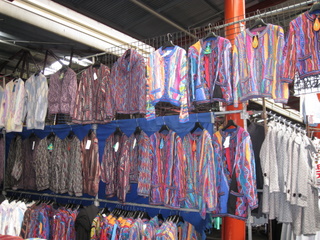 After our early morning flight from Hobart to Melbourne, we headed out to conquer the city. First stop was Victoria Market – a huge (one of the largest in the southern hemisphere) outdoor market selling everything from organic produce to outrageously expensive Nikes imported from China to the ever stylish “Bill Cosby” sweaters. It was unbelievable that the asking price for a pair of cheap Nikes (which may or may not have been knock-offs) was $100 US; what was more unbelievable that people were actually buying them at that price. Nevertheless, it was an interesting place to wander around and people watch.
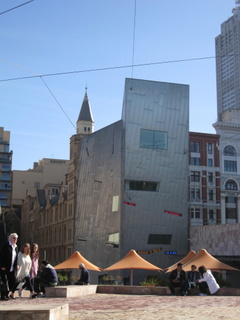 Federation Square is the eclectic modern art center of the city. Not being an architect, it may be harder for me to appreciate the “beauty” of the buildings and other random pieces of permanent art set up, but to me it seemed odd to have a classic looking church overlooking the stainless steel, slanted building with electronic message boards running messages about how much water a waterless urinal saves each year (1 million liters apparently). Regardless of your taste in architecture, Melbourne has something that nearly everyone can appreciate, and I can even more so now that there hasn’t been one available on every other street corner – 7-11. Not only did the city have the “real” 7-11, but they even have slurpees
After a couple of days wandering around Melbourne, we picked up another rental car and headed out to the Great Ocean Road. The GOR is a Pacific Coast Highway type road; that winds you around the southern coast which has some pretty spectacular scenery. The main attraction are the Twelve Apostles (only eight left though) a collection of limestone formations that have been formed by erosion. 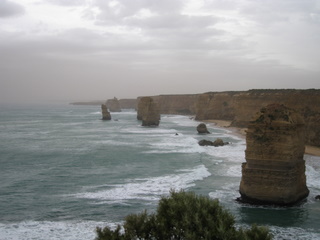
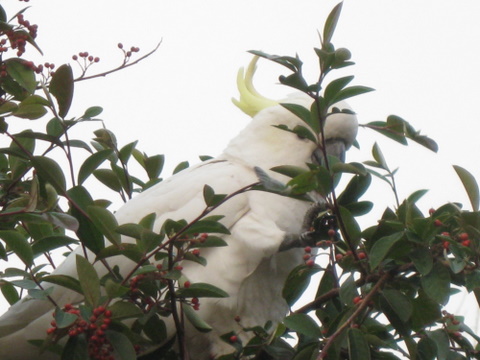
The Blue Mountains, a national park about two hours outside of Sydney, was the next stop on the itinerary. Right outside of the hostel (literally I was woken up by them) were dozens of wild cockatoos. For those not familiar with parrots, these are fairly expensive pets at around $1500 a piece in the US, so you can imagine my surprise at seeing eight or so of them munching on a berry tree three feet from the car. I probably wouldn’t have even noticed them, but Matt slammed the car door and spooked a couple of them who took off. On further inspection, the park housed probably hundreds of the wild birds, many of which were bathing in the waterfalls.
 Sydney came next, and provided a relatively long stop of six days, which was nice to feel a little less like a gypsy for even a brief period of time. As luck would have it, on our way to see the famed Opera House, we stumbled upon the Australian Flugtug. This first annual event, involved homemade “vessels” that attempt to “fly” off of a 20 foot platform into the Sydney Harbour. As expected, most of the attempts involved the people transporting it, also falling or many times intentionally jumping off of the platform in front of a crowd of tens of thousands of cheering fans.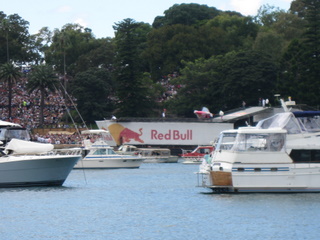
Then there was of course the typical Sydney attractions, the Harbour Bridge, the Opera House, the 2000 Olympic Park (sadly, mostly abandoned), but nothing too exciting happened and I’m tired of writing for today.
Tasmanian Devils
We left beautiful New Zealand behind and made our way to Australia. We basically spent the entire day flying and relaxing at the airport. We had a connection in Sydney with a gap of about 8 hours, this time without getting to stay in the first class lounge as we were not flying on the oneWorld alliance but flying Virgin Blue, Australia’s discount airliner. Slumming it with the normal people was awful…we had to pay for our own food and drink, sit at a noisy gate in uncomfortable chairs with no internet. Finally we made our way to Hobart in Tasmania.
The next morning, we rented a car to make our way around Tasmania. After traversing our way through the winding roads and stopping at every exotic fauna crossing sign for Jill to take a picture, we made it to our first stop, Port Arthur. Port Arthur reminded us of Henry Ford’s Greenfield Village at first with its 19th century cityscape. However, Port Arthur is actually real. In fact, its initial use was a convict colony, where Great Britain sent its felons. They were sentenced to “transportation”. Basically, the convicts were slaves in Port Arthur as they supplied the labor of what became an export colony of manufactured items such as shoes and boats and of raw materials such as lumber. Some of these convicts had ridiculous sentences for the crimes they committed; one in particular was “7 years transportation for stealing £2 of merchandise”. On the downside of Port Arthur, it hasn’t aged very well, many of the buildings have lost their roofs and many of the buildings’ brick structure was dismantled for building materials in Hobart. All in all it was fairly interesting.
Next stop, Cole’s Bay. There is a national park here with a bushwalk that leads you to the gorgeous Wineglass Bay. Unfortunately, due to inclement weather, the bane of our existence, we were unable to make the trek. However, on the plus side, we got to stay in this “caravan”, which was a camper straight out of the 60s with its florescent blue upholstered seats and matching tables, and a change of pace from the normal hostels we have been living.
On that note, we made our way back to Hobart for a few days and stayed in the most despicable hostel we have stayed at in our lifetimes, which by now has totaled about 50 or so. Lonely Planet claims that this hostel was “clean and quiet”. On the contrary, the health department would have a field day with the kitchen. The pots were disgusting, there were no scrubbers to clean them, and one of them had a fork for a handle. The microwave was an ecosystem. The bathrooms had no toilet paper. The dining tables had a plastic liner that was probably 5 years old and had mold growing all over it. The shower curtains hadn’t been cleaned in what seemed to be its entire existence. The group of tourists was obnoxious until all hours of the night. The other people in our room were rude, lascivious, outrageous. We planned to get back at our roommates when we left for our early flight at 4AM, but to our surprise, they woke us up at 4AM when they came home.
Hobart is a fairly big city, about 200,000 people, or half the population of Tasmania. It seemed so strange to us that everything in Hobart stops at 5PM every day, and often with shorter hours on the weekends. Shops, restaurants, Starbucks all closed. The only thing that was open late was Target on Friday night. We just can’t understand for the life of us how shops and what not can stay in business if they’re only open during normal working hours, when do most people get to shop?
Anyway, we’re off to Melbourne, Australia now where we will drive our way to Sydney.
New Zealand
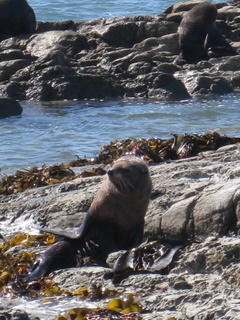 After taking the three hour ferry from the North Island to the South Island, our first stop was the town of Kaikoura. Kaikoura is known for its marine life – most notably whales and seals. Because paying $150 per person for the chance to view the tail of a whale was beyond our budget, we had to settle for viewing the seal colony. Even the consolation prize of seals was pretty neat to watch as they swam around and tried to hop onto the rocks with their big bodies and small flippers.
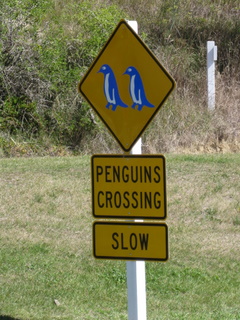 The trend of wildlife continued was we moved south along the eastern coast with a brief stay in Oamaru, known for their penguins. Apparently, the penguins are quite mobile out of the water and even make their way across roads often enough to warrant “penguin crossing” signs posted frequently along the coastal roads. There is a popular overlook where you can view the penguins making their way from the water to the sandy shores for the night, and we were lucky enough to see four little guys waddle to their homes.
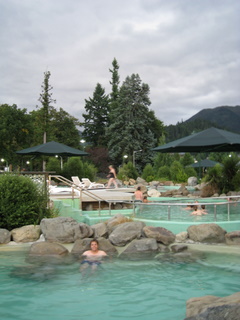 Hamner Springs is known for their thermal pools full of minerals. These basically hot tub type pools each have different mineral contents, the most noteworthy pool is chock full of sulfur. That particular pool’s stench emanates and envelops any who dares to enter the area, which we of course did. Our skin reeked of rotten eggs for several hours after, not surprisingly we didn’t make any friends that night.
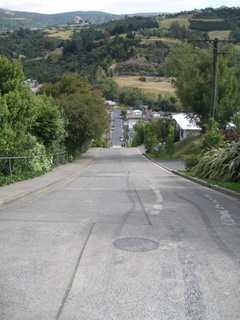 Our next destination was the college town of Dunedin; there isn’t really anything too exciting to do though. The civil engineers might find this interesting (for the rest of you, it is sort of a ‘world’s biggest ball of twine’ attraction), the world’s steepest street is proudly located just outside the town center. The average slope of the street is 1:3.41 with the steepest section registering at 1:2.86. The street has its own souvenir shop, complete with certificates for climbing the 1/10 of a mile long street.
When I went sky-diving a couple of years ago I promised my mom that it was a once-in-a-lifetime, so true to my word, I skipped the adrenaline-laced activities of Queenstown (that and my bare bones health insurance doesn’t cover extreme “sports” such as voluntarily jumping out of planes). I instead substituted learning to drive a manual. It wasn’t as hard as I had thought to stay focused on staying on the wrong side of the road. The only complication involved getting used centering myself in the lane with a right-hand drive car – I may have slightlyveered left, which is far better than steering into oncoming traffic in my opinion.
C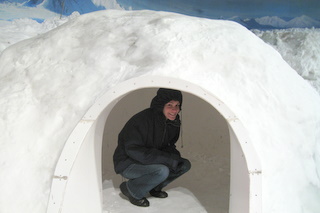 hristchurch is used as a major jumping off point for Antarctica, and as such of course banks in the tourism dollars at the International Antarctic Centre. Matt and I were seemingly sick of the perfect mid-70’s and sunny skies weather, and needed something a little closer to the Michigan winter we were ‘missing’ out on. In the Antarctic Centre they had a snow and ice experience, where temperatures reached about 20 degrees F, and wind chill was about 0 – not much different than a Michigan winter, though for some reason we were drawn inside the setup for the ‘storm’. A group of several guys didn’t even bother putting on the parkas provided, and when asked why, their only response was “we’re from Canada”.
In Christchurch, a historical jail was converted to a hostel. Few changes were even necessary to complete the renovation, as the doors to the rooms were left alone, creating cells for patrons. The irony of the hostel was that it was the best nights sleep I had gotten in awhile because the walls were made of concrete two feet thick. 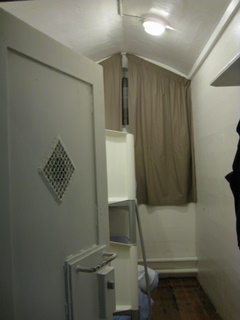
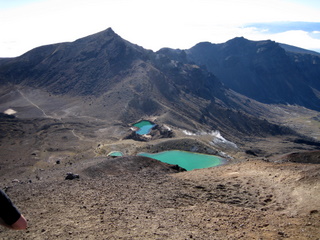 Making our way back across to the North Island to catch our flight out of Auckland, we stopped at the Tongariro National Park. Our first attempt to do the acclaimed Tongariro Crossing trek got rained out, but luckily our second attempt the weather cooperated and we completed the day hike. During the hike you get to see a very diverse landscape – a volcano, the crater, the “emerald lakes” (which are by far the greenest body of natural water I have ever witnessed), then down through forest – not a bad variation for a 6 hour hike.
Our final stop before heading to Auckland to turn in the car and catch our flight to Australia was at the Waitmo Caves. These caves have been around for hundreds of thousands of years and contain the highest concentration of glowworms of any of the numerous caves in New Zealand that house them. It was kind of cool to see them, but in the end I feel like I paid $28 to see lite-brite pegs glued to the ceiling of a cave.
“I don’t want to go on a rant here”
Why do Americans complain about gas prices? Everywhere we’ve been so far, gas has been far more expensive than in the US. For example, here in New Zealand, gas is NZ$1.749 per liter, or approximately US$5.42 per gallon. Waaahh, my gas prices went up 33% in one year, I can no longer afford the “necessities” like an American SUV or a European car, high-speed internet, a cell phone with tons of minutes and a data plan, designer clothes, an expensive house (that is no longer expensive), a plasma TV, an iPod, and everything my neighbor has. Try living in New Zealand for a little bit where bare essentials cost multiples more than they do in the US, and mind you New Zealand is a farming country. Eggs are US$2.50 a dozen, Milk is US$4.60 a gallon, liquor/beer/wine is 100% more expensive than in the US (from excise taxes I assume, domestic stuff is just as expensive), Boneless/skinless chicken breast is US$8 a pound. Shoes are twice the price as in the US. Maybe this is because the dollar is weak or because New Zealand is an island, but I’ve talked to New Zealanders who have complained to me about their high prices. “We’ll all go broke,” said one Kiwi.
Why are eggs so expensive? So we were in the library in Auckland and I picked up a magazine called “Organic NZ”. It is a periodical dedicated to the organic farmer in New Zealand. There was an article in there that talked about how chicken batteries are essentially banned in New Zealand. A chicken battery is where Napoleon Dynamite worked, where chickens are in a warehouse in tiny little cages (probably all over the US, not just Idaho). If eggs are produced from chicken batteries they have to have a label on the egg carton that says “Caged Eggs”. These eggs are hard to find, but are cheaper. I would assume that this has to affect the price of chicken meat (chicken batteries can have an estimated 10,000-20,000 chickens per acre of warehouse stacked 5 high 1 foot apart in aisles 7 feet apart). There are apparently a ton of government restrictions here that seem to raise prices on many things, not necessarily just because it’s an island. We were watching one of the two TV stations we had in Oamaru on the South Island. The show was like Animal Planet’s “Animal Precinct” but for farm animals. The “detective” went out to a pig farm and warned the owner that his pig pen was “too muddy” and didn’t have enough clean water and shelter. Just goes to show you what lengths New Zealand goes to protect its animal’s rights and prevent cruelty.
By the way, the best invention since [insert favorite lame invention, a good example would be sliced bread] is flavored tuna. I used to hawk this stuff in college. It was so cheap. But I’d have to add mustard like crazy to it to make it taste good (not mayonnaise as I was actually trying to stay fit in college). Anyway, in New Zealand, they have a ton of flavored tuna like “Mexican Salsa” and “Spicy Thai Pepper.” It’s like candy. They come in these cute little 100 gram containers for like NZ$1 each. They don’t need to be refrigerated, nor do you need a can opener. Yum yum. Jill for some crazy reason hates tuna and all fish for that matter. She won’t let me in the same room as her when I eat it. She said she had a bad experience with fish, just as with yogurt when her brother allegedly put a bagel lathered up with yogurt in his mouth and “made it talk” and the yogurt went all over the place. Apparently she was unable to eat yogurt again for 12 years. So maybe the tuna trauma will end soon.
Am I missing something? Compared to South America (especially Rio), New Zealanders seem to be way more courteous. I swear, anytime you’d look the other way while waiting in line in South America, someone would jump right in front of you. In New Zealand, a Kiwi will approach you and ask, “Is this the end of the queue? Cheers mate!”
“What the hell does rant mean?”
Monopoly Money and Pokémon Cards – North Island New Zealand
Because Matt has chosen to write an editorial, I guess it becomes my job to provide a synopsis of New Zealand thus far…
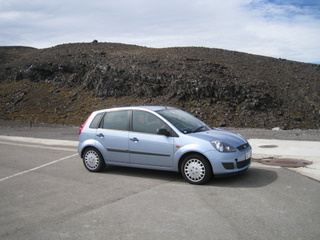 After spending a few days wandering around Auckland, we got our rental car (a little Ford hatchback in surprisingly good condition for $20 a day) and took off for the rest of New Zealand. I don’t know how to drive a stick-shift and refused to learn while driving on the “wrong” side of the road, so Matt has gotten drive quite a bit of driving time in the last two and a half weeks. Luckily he’s only had a single incident of looking left instead of right entering one of the numerous round-a-bouts. Besides that lone honk I am happy to report no accidents while driving or crossing streets, especially because unlike Great Britain, there is no paint on the streets telling tourists the proper direction to check for oncoming traffic.
Our first stop was in Rotorua, where we saw a Maori show and ate a traditional hangi meal. A hangi is a type of cooking that literally a hole is dug in the ground and filled with hot volcanic rocks and food and then buried in the ground for three hours when it cooks. It was here that we also discovered the amazing desert New Zealand calls pavlova, where I felt the need to make up for the 25 years I didn’t know this wonder-food existed.
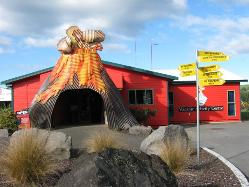 While in Taupo , having little else to do because of the poor weather, I decided to go be a science geek and learn about volcanoes at the Volcanic Activity Center. The outside of the building says a lot about it; its main purpose is to entertain (and maybe slightly educate) six year olds going on school field trips. However, the façade didn’t dissuade me from the $9 entrance fee, which was money well spent for the “earthquake simulator” if nothing else.
All in all New Zealand is a very welcome change from South America – it is so nice to be able to understand what people are saying, even if they overuse the words “cheers”, “mate”, and “wee”. English does apparently come at a premium on this island however, as most things are ridiculously expensive. The basic staple of any college diet, ramen noodles, which provide a decent meal for a mere 10 cents in the States, cost over a dollar here. The same economy-priced crap that you find in a $1 store in the US, is now conveniently located in the $2 store in NZ. The fact that this is a relatively small island has something to do with costs I’m sure, however the declining value of the US dollar certainly doesn’t help the cause either. One radio dj here valued the US dollar to be somewhere between Monopoly money and Pokémon cards, which unfortunately I am finding to be the truth.
Chile
 In Santiago, we of course had to visit a winery so Matt could hone his connoisseur skills. He chose “Concha y Toro”, which apparently is rated in the top 10 brands of wine in the world (who knew?). The tour wasn’t all that interesting; they showed us a few grapes and took us to a cellar. Matt then proceeded to drink all three of his generous sized “tester” glasses of wine, plus my three…
After another day of meandering around Santiago, we took off for Punta Arenas, Chile – the gateway to the famed Torres del Paine National Park in Patagonia.
Once we arrived in our refugio (basically a hostel located in a log cabined façade building, named as such in my opinion to charge double the price of normal hostels), we took off for the “Towers” hike. Looking at the map, the hardest section of the treks distance was labeled as 5 and the contours ranged from 500 to 1500. I figured 1000 feet over 5 miles shouldn’t be that steep – the metric system didn’t register in my mind until I saw the outrageous slopes of the mountain trail.  The trek started off in beautiful weather – 70’s and mildly sunny and blue skies freckled with only a few clouds. That lasted about an hour. Then it became blatantly clear to us why the guide books advise against going to the park in the southern hemisphere summer. That perfect 70 degree weather dropped to probably the 50’s, the sunny sky turned a dismal grey and started spitting out rain mixed with hail, and worse yet, the infamous 100 mph winds picked up. We made it to the nearest camp (most likely still 2 miles from where the weather turned) to hopefully wait it out and continue our journey. Unfortunately, the weather didn’t appear to be letting up anytime soon. We started our trek back, and since you are reading this, we obviously made it back safely – certainly not without incident though. I can’t even tell you the number of times I assumed a near fetal position to keep from getting blown off the mountain. Since the wind (and rain) was at our backs, the back of my jeans (yes, jeans – we came very ill prepared in regard to hiking gear and apparel – we were wearing running shoes and carrying a laptop backpack instead of having the proper hiking boots and fancy hiking backpack with the long water straw) was a vastly different color than the dry front of my pants. But alas, it was an experience and luckily our one and only set of warm clothes managed to dry by the fire that night.
The next day, we apparently had forgotten the incident of the previous afternoon because we set out again, this time on a 15 mile round trip hike in the same beautiful 70 degree, sunny weather this time to see the “Horns”. I am happy to report that the weather maintained its good front and the only difficulty was suffering from being out of shape – but I’ll just attribute that to the “fat butt disease” (The Office anyone?) of a desk-job.
We set up our flights from Punta Arenas to Santiago and Santiago to Auckland with about an 8 hour layover in Santiago so that we could maximize our time spent in the Admirals First-Class Lounge (the joys of coach travel with elite status) enjoying the freebies. That extra time was needed as our first flight was delayed by almost 5 hours, so sadly a majority of Matt’s birthday was spent with the “regular travelers” in the domestic terminal.
 We got to the Santiago airport on February 24 and thus got our passport exit stamp from Chile on the 24. We didn’t enter New Zealand until February 26 (taking into account the 15 hour time difference from Santiago – 17 from EST), as a result, according to our passports, we spent an entire day in limbo.
“Paris of the South”- Buenos Aires
After basically killing time in Sao Paulo, we made our way to Buenos Aires, Argentina (Sorry Cristina Learman).
We basically went to Adelaide going to the Evita museum (thanks Tres). “Don’t Cry for me Argentina…” It was kind of a crappy Museum and everything was in Spanish but it only cost 3 bucks. One of the comments in the guest book was “This museum was hard to follow and I don’t understand how Evita got famous”; at least we weren’t the least cultured ones there.
 The Recoleta Cemetery is where all the Argentinean Elite are buried. It is a pretty amazing spectacle to see the above ground tombs, especially the enormity of some of them and of the cemetery in general. Eva (Evita) Peron is buried here, there wasn’t anyone else that we had even heard of though.
We went to La Boca, a town of Buenos Aires, where the most popular futbol team in Argentina – Boca Juniors plays. Maradona used to play for this club, who is arguably the best soccer player of all time (Pele from Brazil being the other). We took a tour of the stadium, and we wanted so badly to go to a game. Unfortunately, the Boca Juniors weren’t playing until after we leave, so we instead went to go see Lanus play their first game in the America’s Cup (basically all the countries in North and South America participate except for US and Canada), which is very similar to the UEFA league in Europe. Lanus was last year’s Argentinean champion. The crowd there was crazy; there is either a barbed wire fence or literally a moat separating the fans from the field. The home team fans aren’t permitted to leave the stadium until the opposing fans leave the surrounding area – I think they should start implementing this at the Horseshoe at Ohio State.
We also tried to go to a theme park in Buenos Aires. I felt like Clark Griswold from the National Lampoon’s movie “Vacation”. In this case, we didn’t travel by station wagon halfway across the country to find out Wally’s World was closed; we traveled across the globe to go to a closed “Saint World,” themed after Jerusalem. Instead of holding up the security guard to go on all the rides, we just went across the street and bought some ice cream and watched the ocean until we decided to go back to our hostel. We heard about this park from the magazine “Budget Travel.” Someone had sent in their story from the park. See their story below.
 “Our Buenos Aires guidebook recommended Tierra Santa [Saint World], a religious theme park that resembles Jerusalem. All we knew was that highlights were said to include a laser-light show of the creation story. Upon entering the park, we heard a voice over the loudspeaker: ‘We regret to inform you that Christ will not be resurrected due to high winds. We will resume the resurrection as soon as possible.’ Twenty minutes later the winds died down, and sure enough, an eight-foot-tall Jesus emerged from the mountain in the center of the park.”
Now Jill would like to add something before we make our way to Chile.
Argentina is known for tango. There are several opportunities for beginners to try and learn the art in Buenos Aires, but Matt would have absolutely nothing to do with lessons (though in the end, it’s probably better that way – it saved me from inevitably several broken toes). We went to an Argentine restaurant, which happened to have a tango show. After several glasses of wine, Matt agreed to at least watch the show. So we had a steak dinner with drinks and a show for the same number of pesos as it would have cost dollars in the US for a night out in the “Paris of the South” – certainly not bad for a third of the price.
 Our hostel is just off of a road called 9 de Julio, which according to wikipedia is the widest street in the world. It is at some parts 10 lanes wide (in each direction) plus a huge median.
Sao Paulo
Basically Sao Paulo is a big city. There really isn’t anything too spectacular to distinguish it from other large cities around the world, except that is it the fourth largest, with a population of about 19 million. Because it isn’t really on the tourist radar, English is harder to come by than other foreign cities; my high school Spanish to the rescue – well, sort of. It took me a few trys to make sure the movie we were going to see had only Portuguese subtitles (not dubbed), but I managed to get it right. Given that I haven’t had any Spanish in almost seven years, and Spanish is still a different (though quite similar) language than Portuguese, I think I did fairly well for myself (and Matt).
While sitting in a churrascaria (Brazilian restaurant, basically a meat buffet – though Wikipedia describes it a little better) Matt wants to order a beer, though is completely unable to communicate that to the waiter, without the typical point and grunt method provided by a menu. I step in and end up getting him exactly what he wants. I then ask Matt what he would do without me; “go to McDonald’s” was his only response.
Rio de Janeiro
After our red-eye flight from Miami, we arrived at our hotel in Rio Saturday morning completely exhausted. Our early arrival paid off though, when we got a complimentary upgrade to an executive suite. The hotel that we staying in for free (hotel points – courtesy of Matt’s days as a consultant) has a going rate of over $700 US a night. I’ve decided that Matt needs to go back to his job because the perks are so good for me: this hotel is significantly better than paying $100 a person for a bed in a 16-bed hostel during peak Carnivale times.
Though we were tired, Carnivale festivities wouldn’t wait for a nap, so we headed to Ipanema beach for the street parades. Overall, the streets are fairly similar to Mardi Gras in New Orleans: a lot of drinking, eating, and standing around. The biggest difference is obviously the temperature, mid-80’s here! Another notable difference is instead of everyone wearing beads, people wear head bands with bobbly ears and a lot of men dress in drag. A couple of “nurses”, complete with dresses, heels, and wigs made our bus ride quite entertaining. The bus driver even made a special stop for a beer run for these nurses.
Unfortunately, the weather hasn’t exactly been cooperating. Beyond Saturday, it has been rainy and overcast. Ipanema and Copacabana beaches just aren’t the same without the hundreds of umbrellas and even more people. It is true that the beaches attract the scantily clad; it was quite common to witness old men wearing nothing but a speedo and running shoes out for their afternoon jog.
We wanted to watch the Superbowl on Sunday. Matt asked the concierge desk where we could watch it, and they told us we needed to go to Shenanigans, a bar in Ipanema. So we hopped in a cab and were in line at the bar before the game started. Unfortunately, this being one of only a few bars in all of Rio playing the Superbowl, and it apparently being more popular than people thought, we didn’t get there early enough. We proceeded to wait in line for over two hours (with fellow Americans travelling as we are), occasionally getting updates yelled down to us from the balcony of the bar, while we watched Brazilians, who mind you didn’t even know who was playing, stumble down the stairs to exit. After two hours of waiting as the sixth and seventh people in line (thus making us the “official gatekeepers to the bouncer”) we gave up and headed back to the hotel. There is nothing like waiting two hours in line at a fake Irish bar in Rio de Janeiro during Carnivale. Upon entering the hotel, we heard cheering from the bar, to find out, unbeknownst to us (or apparently the concierge desk) that our own hotel was playing the game. So after $30 in cab fare, and waiting around for two hours, we at least got to see the fourth quarter, which apparently was the most exciting anyway.
The huge event of Carnivale are the samba parades held in the Sambadromo on the Sunday and Monday nights before Ash Wednesday. It is AMAZING! The costuming, the floats, and the atmosphere are unlike anything I have ever seen before. There are six different samba schools that put on their show, each lasting about an hour. The sheer number of people participating in each parade is amazing (about 5,000 people per school according to Matt’s Fermi estimation), not to mention how detailed each and every costume is. The crowd participation is also something to be seen; the Brazilians sing and dance along with the schools while waving the school flag. Matt even got swept into his surroundings because he “liked the song”, though he doesn’t speak a word of Portuguese, or even Spanish. Much different than Detroit’s Thanksgiving Parade.
Walt Disney World
Jill has been telling everyone that I am the one that wanted to come to Walt Disney World. And it’s essentially true. I haven’t been here since I was 12 and only went to the Magic Kingdom at that time. The time before that I got lost at Epcot when I was 3. So it’s been awhile.
We stayed at the economical “All Star Music” Resort on Disney property. Our first day we went to visit the Magic Kingdom where I tried to attain “Galactic Hero” status by scoring 999,999 points on Buzz Lightyear’s Space Ranger Spin. Unfortunately, my shooting prowess was no match for the Evil Emperor Zurg, where he stopped me cold with 752,300 points that promoted me from Space Cadet to the second highest rank of “Cosmic Commando. The Hall of Presidents in Liberty Square was probably my favorite attraction at the Magic Kingdom behind Buzz Lightyear…
Another honorable mention was Epcot, where I didn’t manage to get lost this time. Epcot has the “World Showcase” where they have areas set up for many countries (no, this isn’t our trip around the world). They had an exhibit where you could try all of the Coke products from around the world. The drink “Beverly” from Italy is by far the most disgusting drink in the world -it tops straight hard liquor. Jill tried it in Atlanta at the Coca-Cola museum and found how disgusting it was. And low and behold, Epcot had the same exhibit, and Jill thought for some reason that Beverly was going to somehow taste better. Enjoy the video below.
In any event, we are headed to the Miami area, the Florida Keys, and the Everglades. On Friday night, we head to our first “real” destination, Rio de Janeiro, Brazil.
Pre-Trip
An excerpt from The Alchemist:
A certain shepherd sent his son to learn about the secret of happiness from the wisest man in the world. The wise man listened attentively to the boy’s explanation of why he had come, but told him he didn’t have time just then to explain the secret of happiness. He suggested that the boy look around the palace and return in two hours. “Meanwhile, I want you to do something,” said the wise man, handing the boy a teaspoon that held two drops of oil. “As you wander around, carry this spoon with you without allowing the oil to spill.” The boy began climbing and descending the many stairways of the palace, keeping his eyes fixed on the spoon. After two hours, he returned to the room where the wise man was. “Well,” asked the wise man, “did you see the Persian tapestries that are hanging in my dining hall? Did you see the garden that it took the master gardener ten years to create? Did you notice the beautiful parchments in my library?” The boy was embarrassed, and confessed that he had observed nothing. His only concern had been not to spill the oil that the wise man had entrusted to him. “Then go back and observe the marvels of my world”, said the wise man. Relieved, the boy picked up the spoon and returned to his exploration of the palace, this time observing all of the works of art on the ceilings and the walls. He saw the gardens, the mountains all around him, the beauty of the flowers, and the taste with which everything had been selected. Upon returning to the wise man, he related in detail everything he had seen. “But where are the drops of oil I entrusted to you?” asked the wise man. Looking down at the spoon he held, the boy saw that the oil was gone. “Well, there is only one piece of advice I can give you”, said the wisest of wise men. “The secret to happiness is to see all the marvels of the world, and never to forget the drops of oil on the spoon.” The shepherd said nothing. He had understood the story: a shepherd may like to travel, but he should never forget his sheep.
After about six months of planning destinations, transportation, vaccinations, etc., the countdown is at last, just a single day. As I finish up the final details, I am overwhelmed with excitement mixed with a little apprehension. Have I overlooked something important? How am I going to lug around all of my belongings in a single bag for eight months? How are Matt and I going to put up with each other for that long? This is a once-in-a-lifetime trip, with the chance to see world-class museums, architecture, and learn about fascinating cultures. This doesn’t come without sacrifices though; when we get back, we will both unemployed and homeless… Hopefully it is worth it…
 I Quit My Job To Travel